


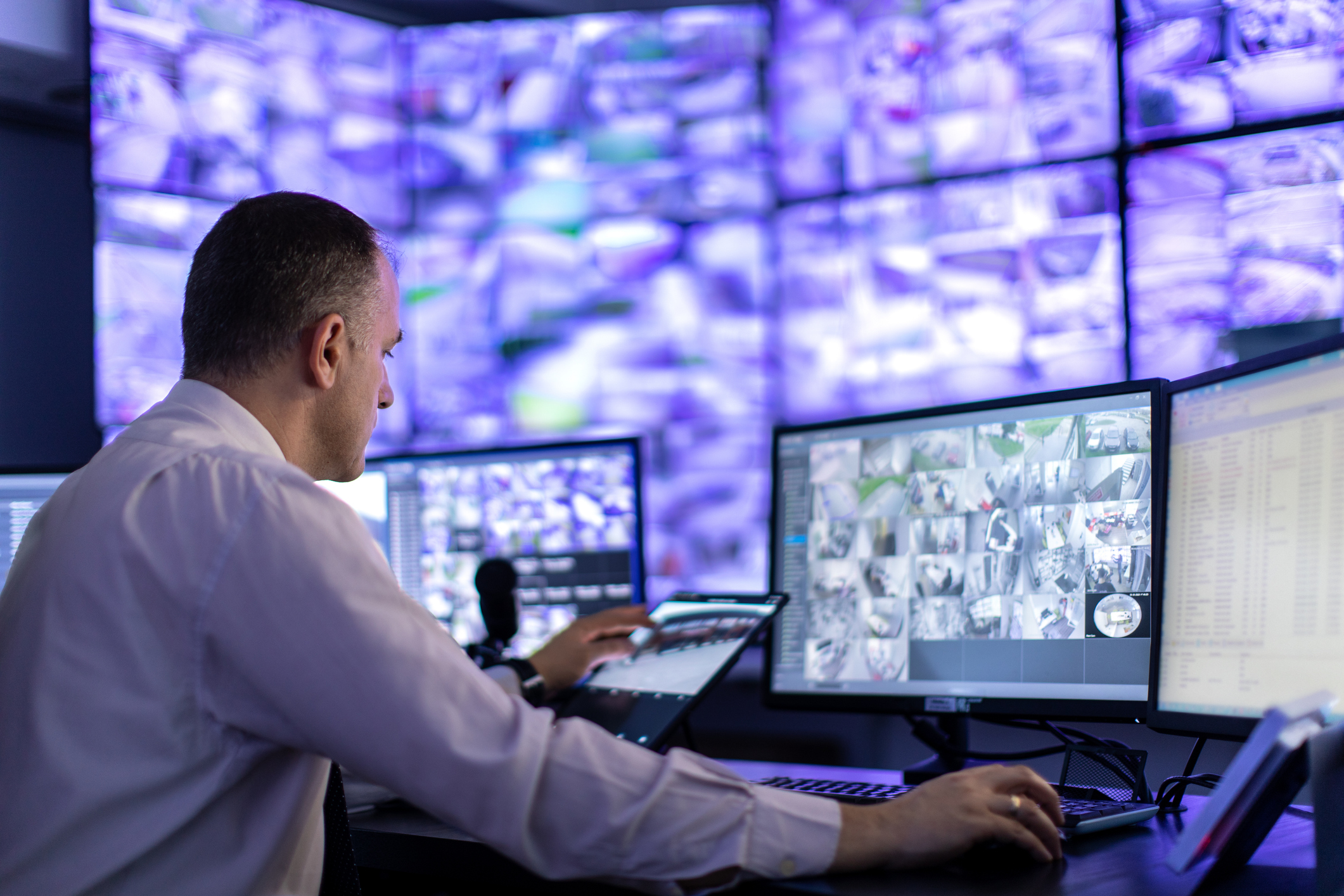
In environments like oil and gas, petrochemical refining, heavy manufacturing, or public safety, the operational reality is uncompromising. Earl Carter, Tru-Connect’s command and control subject matter expert, often puts it simply: “Minutes cost millions. It just does.” When a process breaks down or an environmental hazard emerges, the difference between a controlled response and a catastrophic loss is measured in seconds. Yet, despite these stakes, most organizations continue to approach their command centers through a flawed, hardware-first lens. They design their rooms backwards, selecting technology before understanding the operator, and choosing hardware before defining the mission.
A command center isn’t just a technology purchase. It’s an operational environment that directly affects how people respond under pressure. To achieve the enhanced visibility required to protect assets and personnel, leadership must pivot away from the “commodity” model of standard installers and toward a design-thinking philosophy that prioritizes the human operator as the core of the mission.
The “AV-First” Trap: Why General Integrators Fail the Mission
The industry is currently plagued by what Earl refers to as the “AV-First” trap. This occurs when an organization hires a standard audiovisual integrator, someone whose expertise is rooted in corporate boardrooms or commercial AV systems and expects them to understand the stakes of a 24/7 mission-critical environment. Because these providers know how to mount monitors and connect inputs, they market themselves as command center builders. They are applying corporate office logic to high-consequence operational settings.
The distinction is not a matter of brand preference; it is a matter of life safety. A boardroom is designed for a one-hour meeting where people look at a PowerPoint. A command center is a living ecosystem where people live for 12 hours under high stress. If you use a boardroom integrator to build your nerve center, you are effectively asking a house painter to perform surgery.
“Most control rooms are being built by people who aren’t truly focused on control room environments,” Earl says. “What I see over and over is teams trying to cobble standard commercial products together instead of building a unified platform. The entire design approach is different, the deployment is different, and how you support the customer post-install is completely different—you can’t run a 24/7 mission-critical environment on a standard 10/5 business support model.”
This ‘cobbled-together’ product approach often results in mismatched systems and creates multiple potential points of failure. An organization might buy hardware from three different top-tier manufacturers, but without a master plan, those components don’t always integrate seamlessly. The operator ends up having to jump between different screens and keyboards just to get a clear picture. In these scenarios, the technology isn’t working for the operator; the operator is working for the technology. Multiple systems. Multiple interfaces. Multiple workflows.
“So,” as Earl puts it, “you have constraint.”
The “Blank Page” Strategic Approach
At Tru-Connect, we believe the only way to avoid these pitfalls is to start at zero. This is the “blank page approach.” Before we look at a monitor or discuss a software feature, we sit down with a blank piece of paper and ask the stakeholders: “What is the mission of this space?”
This discovery process often catches clients off guard. Many expect a sales pitch; instead, they get an audit of their daily operations.
“I will invariably catch somebody off guard,” Earl explains. “The client responds, ‘Well, what do you mean by mission?’ And I’ll say, ‘Well, you tell me. What is the mission of your space? It’s your environment, right?’
By forcing stakeholders to define the unique purpose of their environment, whether it’s monitoring pipeline integrity or managing campus security, we move the conversation from “what can we buy” to “how do we succeed.” This process often uncovers operational design flaws that might otherwise be overlooked. In some environments, something as simple as foot traffic repeatedly crossing in front of the primary video wall can interrupt operator visibility dozens of times per shift. In others, poor lighting design creates fatigue that gradually erodes decision-making over the course of a 12-hour day.
Engineering for Situational Intelligence
One of the greatest misconceptions in the industry is that “visibility” simply means having more screens. In reality, too much data can be just as dangerous as too little. This is the battle of visibility versus data overload. To win, we must move beyond mere screen real estate to achieve situational intelligence.
Situational intelligence is the ability not just to see data, but to understand what that data means for the mission. This is achieved through a common operating picture. This isn’t just a tech term; it means pulling together disparate feeds and dashboards, License Plate Recognition (LPR) technologies, sensors, and live cameras, into a single view that tells a story.
In the petrochemical and oil and gas sectors, this isn’t just about production; it’s about managing a social license to operate. You aren’t just managing sensors, gauges, or dials; you’re managing potential environmental hazards. One un-cleared alarm that turns into a flare-up can cost a firm its reputation with the community and millions in fines. True visibility allows an operator to see the trend before it becomes a crisis.
The Science of the Space: Prioritizing Human Factors
The most sophisticated technology in the world is useless if the human being using it is compromised. We design for the reality of the 12-hour shift. We recognize that an operator at hour ten of a shift in a high-stress environment is not the same as an operator at hour one.
Performance drivers are the subtle factors that dictate whether an operator succeeds or fails:
- Glare and Lighting: We analyze a room’s reflective surfaces with forensic precision. While general integrators select furniture based on catalog aesthetics, they routinely ignore the physics of lighting. The result is a common, costly paradox: an organization spends $500,000 on advanced display technology yet installs shiny finishes and light-colored desktop laminates that create a severe upward “light wash” from overhead fixtures, effectively blinding the person in the chair. By hour six of a shift, this unmanaged glare induces severe eye strain and cognitive fatigue. The technology is functional, but the operator has completely checked out.
- Heat and Acoustics: We select components, like servers, controllers, and power supplies, that reduce the environmental heat load and relocate them out of the operational space whenever possible. LED video walls also generate significant heat, making cooling requirements to offset this heat important design factors we consider. A hot, buzzing room induces lethargy and slows reaction times; a cool, quiet room keeps the team sharp and ready to act.
- The Logic of Layout: We address physical layout errors that seem obvious but are frequently overlooked, details that dictate how much “mental energy” an operator wastes just navigating their day. “Is the room designed so that every time somebody goes to the bathroom, they walk in front of the video wall?” Earl asks. “This seems obvious, but this design error happens all the time.”
A poorly configured command center forces the body to constantly fight the environment. When a room ignores the operator’s optimal reach radius, drops standard desktop monitors into unergonomic positions, or pushes the overview wall past a natural vertical sightline, the physical toll is catastrophic. Operators aren’t just “tired” at the end of a 12-hour shift; they are suffering from severe neck, shoulder, and eye strain that accelerates cognitive fatigue. As Earl puts it, “By the time a high-stress crisis actually hits at the end of a 12-hour shift, operators are mentally depleted, meaning their capacity to make fast, accurate decisions has been completely drained by a poorly designed room.”
Future-Proofing through Flexibility and Scalability
A command center is a significant capital investment. It should serve as a foundation for the next decade, not a snapshot of today. We ensure this through flexibility and scalability.
Modern operations are dynamic, requiring custom, individualized workflows where different operators can configure their own local displays to match their specific roles without disrupting the rest of the room.
Tru-Connect achieves architectural scalability by utilizing a secure AV-over-IT platform architecture rather than relying on disconnected hardware components. This approach allows organizations to expand operational visibility over time by integrating additional rooms, new technologies, and geographically distributed sites without rebuilding the entire environment.
By building the network architecture correctly from the beginning, organizations avoid the “commodity tax” of repeatedly patching or replacing fragmented systems because the original foundation was too rigid to evolve alongside the mission.
The Fact of Performance: Quantifiable Outcomes
When you move the operator to the center of the design process, the results move from “goals” to facts of performance. Designing for the person in the chair creates a positive feedback loop. When the environment is quiet, the lighting is right, and the data is easy to see, the mental effort required to make a decision drops significantly. They aren’t hunting for data; the data is working for them.
This leads to:
- Operational certainty because the team is working with a system built for their success.
- Faster response times because the data is easy to get to.
- Higher productivity because the physical environment doesn’t wear the operator down.
The Mandate for Modern Command Centers
In mission-critical operations, “minutes cost millions” isn’t a phrase we use to be provocative; it is the literal math of failure. When a refinery flares or a transit signal goes dark, you aren’t just losing time; you are losing your grip on the mission. Yet the industry continues to treat these high-consequence environments like simple office renovations, installing hardware that operators are forced to deal with for the next decade.
The “backwards” design model is a choice to accept operational friction. Designing a room without auditing the mission first is like building a cockpit without talking to the pilot; it might look impressive on the ground, but it’s a liability the moment you hit turbulence.
Tru-Connect exists to eliminate that friction. We refuse to start with a product catalog because technology alone doesn’t create visibility; architecture does. By designing around the human in the chair, we transform a room full of screens into an asset that drives your critical operational outcomes, reducing response times, ensuring zero-downtime redundancy, and preventing the human errors caused by shift fatigue.
When the crisis hits, and the clock is ticking, your environment will either be the reason you succeed or the reason you fail. Don’t let a commodity design be the weak link in your mission.
Take Control of the Mission
Is your current command center a strategic asset or an operational constraint? Stop letting hardware-first integrators dictate your response time.
Partner with Tru-Connect to move beyond the commodity model. Let’s start with a blank page and build the operational certainty your enterprise requires.