


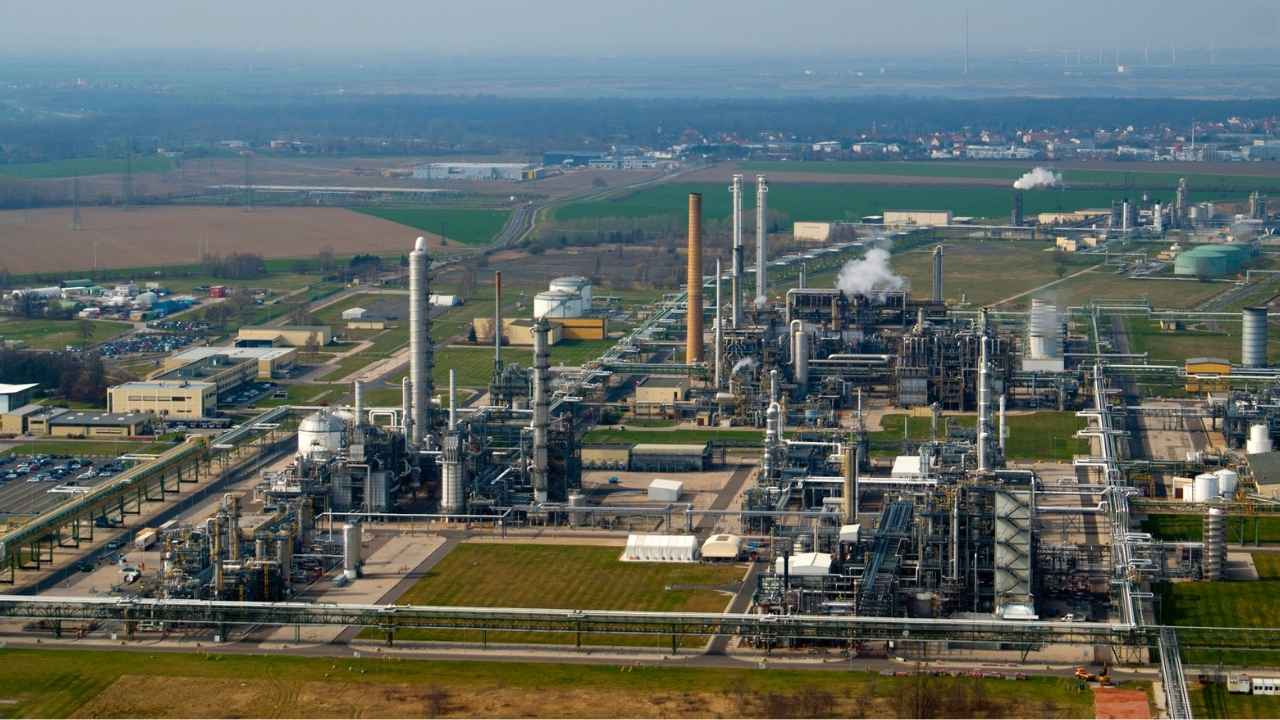
For petrochemical refineries and heavy industrial sites, perimeter fencing serves a far greater purpose than marking a property boundary. It represents the first layer of protection for people, assets, and operations. Yet many organizations still rely on perimeter systems that provide limited visibility and delayed response when an intrusion occurs
Key Takeaways
- Fiber optic perimeter security transforms fencing into an active monitoring system.
- Intrusion events can be localized to specific sections of the fence.
- Integrated camera and lighting systems accelerate verification and response.
- Existing fiber infrastructure can support both security and communications functions.
- Proper engineering allows perimeter systems to scale as facilities grow.
True industrial resilience requires transitioning from a passive physical barrier to an active, continuously monitored asset. Through a multi-discipline engineering approach, industrial facilities can transform standard fencing into a ruggedized, intelligent, and highly integrated data network.
1. Localizing Threats with Fiber Optic Intrusion Detection
In sprawling facility footprints, legacy block-zone sensors fall short. Telling an operator that an alarm was triggered somewhere along a half-mile stretch of land leads to delayed response times and significant security gaps.
A modern fiber optic architecture, utilizing field-proven platforms like the Senstar FiberPatrol FP1150, converts physical anomalies into precise digital intelligence. By attaching specialized fiber optic cable directly to chain-link, welded mesh, or expanded metal structures, the system delivers continuous, real-time intrusion detection.
Using optical time-domain reflectometry (OTDR), the system analyzes vibration signatures associated with climbing, cutting, or lifting the fence fabric and identifies the approximate location of the activity.
Refineries and manufacturing plants are inherently noisy environments surrounded by heavy machinery, rail spurs, and commercial truck traffic. Advanced fiber sensing platforms utilize layered detection algorithms to distinguish localized intrusion activity from environmental conditions such as ground vibration, weather events, and routine operational activity.
The result is more accurate alarm identification and improved situational awareness for security personnel.
2. Automated Incident Triangulation and Response
In high-consequence environments, operators cannot afford to lose critical seconds searching for the correct camera feed during an active security event. By integrating fiber optic intrusion detection with video surveillance and facility systems, perimeter alarms can trigger automated response workflows that accelerate verification and response.
- Dynamic Camera Steering: The instant a fence disturbance is localized, the system feeds precise coordinate data to local Pan-Tilt-Zoom (PTZ) cameras, steering them directly to the impact zone. Operators instantly receive visual confirmation without manual intervention.
- Intelligent Lighting Controls: The same event can activate localized zone lighting or fence-mounted LED fixtures near the alarm location. This improves visibility for responding personnel, enhances video quality for verification purposes, and can serve as a deterrent to unauthorized activity.
Example Deployment Scenario
Consider a refinery with more than two miles of perimeter fencing protecting process units, storage areas, and logistics infrastructure.
If an individual attempts to climb a remote section of the fence, the fiber optic intrusion detection system can identify the disturbance, provide location data, automatically reposition nearby PTZ cameras, and activate localized security lighting. Within seconds, operators receive both alarm notification and visual verification, reducing the time required to assess and respond to the event.
3. The Multiuse Advantage of One Cable with Two Missions
Deploying traditional perimeter security across miles of industrial property line typically introduces extreme infrastructure bloat. Running separate power lines, low-voltage communication wires, and independent networking cables out to every remote camera pole requires massive capital expenditure in civil trenching and materials.
Tru-Connect helps reduce this structural overhead through a dual-purpose architecture that utilizes a single cable wrap to execute two mission-critical functions simultaneously.
- The Sensor Layer: Continuous, real-time vibration and cut detection mapping the entire physical boundary.
- The Structured Cabling Layer: Unused fiber strands within the same cable can function as a high-performance communications backbone. This infrastructure can support:
- IP video surveillance
- Access control systems
- Smart IoT devices
- Environmental monitoring sensors
- Future perimeter technologies
By combining perimeter intrusion detection with network infrastructure, facilities can reduce the need for separate communications cabling while creating a scalable foundation for future expansion.
Why Industrial Facilities Choose Tru-Connect
Many security providers approach fiber optic perimeter security as a standalone hardware installation rather than part of a broader communications and infrastructure strategy. They mount a cable, connect a basic alert buzzer, and walk away, leaving a massive gap between the physical hardware in the field and the core enterprise network infrastructure.
Tru-Connect bridges this gap by combining physical security expertise, structured cabling design, fiber optic infrastructure, and industrial communications engineering under a single team.
- Assessment-Driven Engineering: We map your facility’s unique geographic vulnerabilities, hazardous zone ratings such as Class I, Div 1, and Div 2 environments, and operational workflows to design a perimeter solution tailored entirely to your site footprint.
- Technology Designed for Harsh Environments: Fiber optic sensing systems require no powered electronic devices at the fence line, offer high resistance to electromagnetic interference (EMI), reduce exposure to lightning-induced electrical damage, and are well-suited for many hazardous industrial environments.
- Scalable Infrastructure: Industrial facilities evolve. Whether adding storage yards, expanding production areas, or extending property boundaries, a well-designed fiber optic network can support future growth without requiring a complete, expensive perimeter redesign.
- Cut-Immune Reliability: Effective perimeter security must account for accidental damage and intentional sabotage. If an intruder cuts the perimeter fiber cable, Tru-Connect configures the system to dual-channel loops. Light pulses are instantly sent from both directions, maintaining perimeter monitoring capability up to the point of the cable interruption.
Build a Smarter Industrial Perimeter
Partnering with Tru-Connect means transitioning from single-use security hardware to a long-term capital asset. You gain greater visibility across your perimeter, faster incident verification, and a scalable network infrastructure that supports long-term operational growth.