


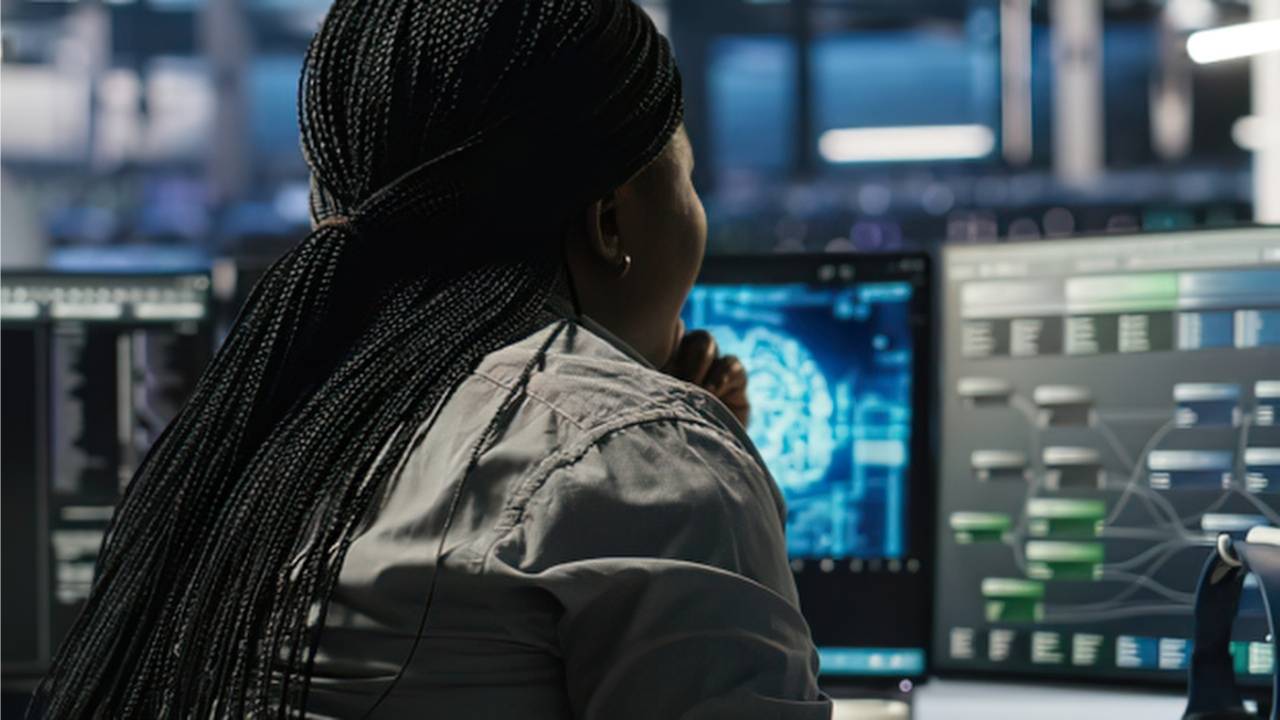
In high-consequence operational environments, whether a municipal utility grid, a regional transit hub, or a public safety dispatch center, the cost of a delayed decision is measured in structural damage, financial loss, or compromised human safety.
A modern command center frequently monitors thousands of concurrent data streams, asset tracking sensors, and live video feeds. Yet, many organizations inadvertently degrade their situational awareness by treating their critical spaces as basic IT hardware repositories.
True operational visibility isn’t just about mounting more screens to a wall. It requires a smart balance between how your software routes data and how your operators actually see it. That is why the success of your room comes down to the operator consoles, the specialized desks where your team sits, monitors the network, and makes critical decisions during long shifts.
1. Why Standard Commercial AV Fails in Command Center Design
Most mission-critical environments are flooded with data but starved for actionable intelligence. When a command center layout is designed backwards, prioritizing hardware procurement over the human workflow, a severe layer of cognitive friction develops.
This friction manifests in two primary ways:
- System Fragmentation: Vital information is routinely stranded across disconnected, brand-specific software systems. This forces the human operator to act as a manual integration point, toggling across multiple platforms just to piece together a single active event.
- Commercial Office Design Flaws: Organizations inherit a secondary layer of risk when a command center layout is built using standard boardroom logic rather than bespoke command and control engineering principles. Applying basic corporate office design to a 24/7 survival space leads to the installation of generic furniture and uncalibrated displays that completely ignore how the human brain processes stress and visual data over a 12-hour shift.
When operators are forced to fight their physical surroundings just to view critical data, response times slip and the environment becomes primed for human error.
2. Streamlining Your Command Center Software
Data orchestration is the underlying engine that solves system fragmentation. It is the automated process of normalizing, routing, and synchronizing disparate data streams into a single, cohesive operational picture.
Instead of forcing an operator to interface with five uncooperative applications, an orchestrated network aggregates critical telemetry behind the scenes. This architecture abstracts the complexity of the underlying IT infrastructure, ensuring that when an alarm triggers, the relevant video feeds, sensor readouts, and incident maps display simultaneously.
By automating information routing, you remove the cognitive burden of manual data management, transitioning operators from a state of constant physical adaptation to a state of total situational awareness.
3. Core Requirements for Mission-Critical Operator Consoles
What is an operator console?
Unlike standard office furniture designed for low-stress, short-duration tasks, mission-critical operator consoles are specialized technical workstations engineered to sustain human endurance, comfort, and cognitive performance over continuous, 24/7 operational shifts.
The Data-to-Console Architecture
To transform raw information into real-time operational action, the command center ecosystem relies on three integrated layers:
- Data Orchestration Layer: Automatically normalizes, filters, and synchronizes disparate software feeds into a unified data stream.
- The Physical Interface (Operator Consoles): Positions critical displays and controls within the operator’s natural field of vision and ergonomic reach zone.
- The Human Processing Layer: Maximizes situational awareness and slashes crisis response times by eliminating visual fatigue and system fragmentation.
When engineering a high-performance visualization layer, standard hardware-centric procurement processes routinely overlook three critical environmental elements:
- Sightline Calibration and Ergonomics: Standard layouts often select console furniture straight out of a product catalog template without calculating room physics. Specialized operator consoles are designed around optimal reach zones and focal distances. Monitors are positioned to match natural fields of vision, minimizing repetitive neck strain and eye movement.
- Environmental Light Wash: Incorrect lighting placement and light-colored, high-gloss desktop laminates create a severe upward light wash that reflects directly into the operator’s eyes. While this glare may not completely obscure a video wall, it accelerates visual fatigue, causes debilitating headaches, and visibly compromises operator acuity by hour six of a 12-hour shift.
- Thermal and Acoustic Management: Standard IT setups frequently drop noisy, heat-radiating PCs directly beneath user desks, ignoring restrictive cable pathways and operator comfort. Large display matrices also pump significant radiant heat into the environment. Advanced console engineering systematically avoids these failure points by offboarding noisy hardware and migrating heat-intensive power supplies from the room to dedicated infrastructure closets, keeping the immediate workspace cool and quiet.
4. The Tru-Connect Umbrella Advantage
Tru-Connect eliminates the structural mismatch between software complexity and physical room design by unifying two distinct capabilities under a single roof:
- Room Design and Human Factors: Guided by mission-critical control room experts, we engineer the physical workspace around human ergonomics, acoustic control, thermal mitigation, and glare reduction.
- Network and Cable Infrastructure: Because we house a full-scale, mission-critical enterprise infrastructure division alongside our specialized command team, we don’t just hand you a layout blueprint. We build and deploy the secure network architectures, routing paths, server racks, and automated orchestration systems that power your displays.
By educating project stakeholders about the environment’s hidden physics before prescribing technology hardware, we completely shift the implementation paradigm. We move your project past the limitations of commodity hardware procurement, delivering an integrated, high-performance workspace engineered from day one to support reliable operations and rapid response.
Take Control of Your Operational Visibility
Is your command center layout accelerating your response times, or is it actively fighting your operators? Don’t let commercial design constraints compromise your mission-critical infrastructure.
Schedule a Discovery Session with Our Command and Control Specialist to analyze your space’s room dynamics, human factors, and orchestration architectures.